


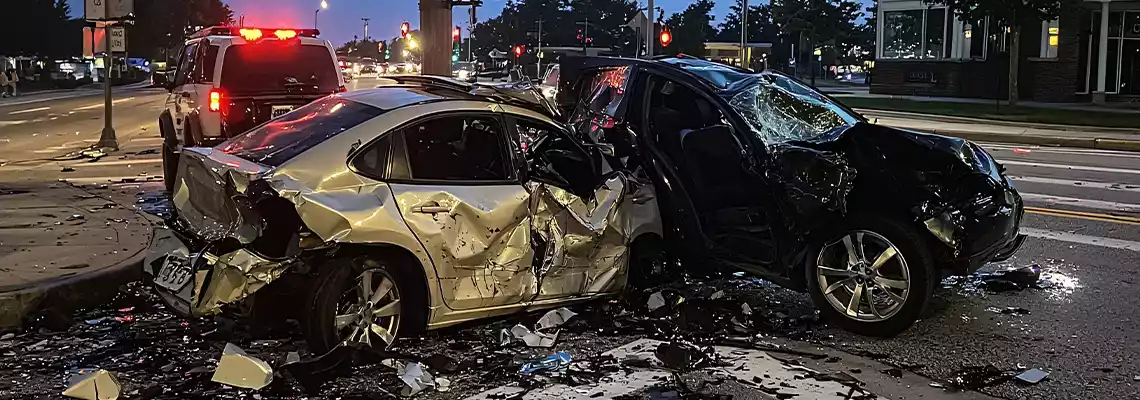
Car accidents are an unfortunate but common occurrence on Michigan roads. Among the most dangerous types of collisions are T-bone crashes, also known as side-impact collisions. These accidents often result in serious injuries due to the vulnerable position of the occupants in the struck vehicle.
Understanding the intricacies of intersection liability and the injuries that can arise in these cases is crucial for victims seeking justice and compensation. At Schefman & Associates, PC, located in Bloomfield Hills, Michigan, we’re dedicated to helping victims of car accidents manage the challenging legal process and secure the compensation they may be entitled to and get the medical care they need.
With extensive experience handling serious collision cases, our skilled group of attorneys knows what it takes to win your case. If you or a loved one has been injured in a car accident, we offer personalized, compassionate representation to protect your rights every step of the way.
If you or a loved one has been injured in a side-impact collision, consulting Schefman & Associates can be vital to protecting your rights and securing compensation.
What Makes a T-Bone Crash So Dangerous?
A T-bone crash usually occurs when one driver fails to stop or yield the right of way and may be traveling at full speed. Because vehicles have limited side-impact protection compared to front or rear crashes, occupants on the impact side often suffer significant injuries. These can range from broken bones and internal injuries to traumatic brain injuries and even fatalities. The side impact can produce rotational forces that add to the risk of serious injuries to the spine. And head injuries can occur from direct impact or from indirect impact caused by a whip-movement of the head and spine.
In Michigan, heavy traffic even in traffic circle intersections, can create a high-risk environment for T-bone crashes. Factors contributing to these accidents include running red lights even where there is a traffic circle, failing to stop at stop signs, distracted driving, and impaired driving.
How Is an Intersection Crash Pursued?
Liability is established by establishing the fault of the other driver, a duty and breach of that duty. Michigan operates under a threshold injury requirement in order to pursue compensation from the at-fault driver and owner. Your injuries must demonstrate a serious impairment of body function: an objectively manifested injury of an important body function that impacts ones life, which may be on a temporary basis. Head injuries, such as a traumatic brain injury (concussion) can satisfy this requirement. Here’s what victims need to understand about determining liability:
- Traffic laws and right of way: The driver who violates a traffic signal or fails to yield the right of way is typically considered at fault, having breached the duty owed to others on the road. Violation of traffic laws may establish this, but there may be liability even when the at-fault driver is not ticketed.
- Police reports and witness statements: The police often determine fault at the scene based on evidence and statements, even without an admission by one of the parties, but the police report itself is not admissible in Court. Witnesses provide critical information supporting one party’s account of the crash.
- Traffic cameras and video evidence: In some intersections, traffic cameras or nearby surveillance by a business camera can capture the accident, helping to clarify who caused the crash or eliminating any question of comparative fault.
- Comparative negligence: Michigan follows a comparative negligence rule, meaning fault can be shared. If a victim was partially at fault (e.g., speeding through the intersection), their compensation may be reduced proportionally.
Because liability can hinge on subtle details such as headlights on, turn indicators used, blind spots, victims should work with Schefman & Associates; we understand how to investigate these cases thoroughly.
Common Causes of T-Bone Crashes at Intersections
Understanding the common causes of T-bone collisions helps victims and drivers alike stay vigilant on the road. Here are some frequent contributors to side-impact crashes in Michigan:
- Running red lights or stop signs: Ignoring traffic control devices is a leading cause of T-bone crashes. Drivers may be distracted, in a hurry, or impaired when they fail to stop.
- Distracted driving: Texting, phone use, eating, or other distractions cause drivers to miss signals or overlook other vehicles at intersections.
- Impaired driving: Alcohol or drugs impair judgment and reaction time, increasing the risk of dangerous intersection collisions.
- Speeding: Excessive speed reduces the ability to stop in time or control the vehicle, making side impacts more likely.
- Poor visibility: Weather conditions, sun glare, or obstructed views due to parked vehicles or roadside objects can prevent drivers from seeing oncoming traffic.
- Mechanical failures: Brake failure or steering issues can cause a driver to enter an intersection improperly.
If you or someone you know has been involved in a T-bone crash, Schefman & Associates can help investigate these factors and maximize your recovery.
What Victims Should Do After a T-Bone Crash
Being involved in a side-impact collision is traumatic and confusing, but victims should take specific steps to protect themselves legally and medically:
- Seek medical attention immediately: Some injuries from T-bone crashes may not be immediately apparent, and you may be too confused to know you need care. Prompt medical evaluation is essential.
- Call the police: A police report provides an official record of the accident, which is critical for insurance and liability issues. Do not give in to any driver’s request to avoid a police report.
- Document the scene: If possible, take photos of the vehicles, damages, road signs, and any visible injuries.
- Gather witness information: Collect contact details of witnesses who saw the crash, as their testimony may be crucial.
- Notify your insurance company: Report the accident promptly but consult with counsel first; even your own insurer may use everything you say against you. And you may even be contacted by the other driver’s insurer.
Schefman & Associates will help you work through your own insurance claim, gather evidence and help you organize your medical care, negotiate if possible to maximize compensation, and file suit if needed to enforce your rights.
Taking these steps promptly can make a significant difference in protecting your rights and building a strong case. Remember, having Schefman & Associates by your side assures you will have taken all of the right steps to protect yourself.
Checklist for T-Bone Crash Victims
To help you stay organized during a stressful time, here is a checklist of important actions every T-bone crash victim should take immediately after the accident:
- Get medical care right away: Even if you don’t feel injured at the time or feel too shaken up to go to the hospital, you need to seek prompt medical attention; symptoms like whiplash or internal injuries may not appear immediately. Prompt medical documentation is also crucial not only to investigate injuries quickly, but will aid any future insurance or legal claims.
- Call 911 and file a police report: A formal report creates an official record of the crash, which can be vital in determining fault. Be honest and detailed when speaking to the responding officers.
- Take photos of the accident scene: Capture images of all vehicles involved, skid marks, road signs, and any visible injuries. These photos can serve as powerful evidence when dealing with insurance companies or in court.
- Exchange contact and insurance info with other drivers: Make sure to get the other driver’s full name, phone number, license plate number, and insurance details. Don’t rely on verbal agreements or memory alone. And never agree not to call the police!
- Collect witness statements and contact details: Ask any bystanders if they saw the crash and would be willing to provide a statement. Witness accounts can help establish what really happened and support your version of events.
- Avoid discussing fault or apologies or giving recorded statements without legal advice: Insurance adjusters may try to use your words against you later. Politely decline to speculate on fault or your injuries until you’ve spoken with an attorney.
- Contact Schefman & Associates to protect your rights: An experienced lawyer can guide you through the legal process and fight for you and your loved ones. Acting quickly improves your chances of preserving important evidence.
Taking these steps can significantly impact the outcome of your claim.
Contact Us Today
If you’ve been injured in a T-bone crash, it’s crucial to seek skilled legal help to protect your rights and pursue the compensation you are entitled to. Our firm understands the challenges Michigan drivers face and provides dedicated support throughout your case. We proudly serve clients across Wayne County, Oakland County, Macomb County, Washtenaw County, and Genesee County. Contact us today for a free consultation.